House Flip Budget Template: Plan Every Dollar Before You Buy
Free house flip budget template and walkthrough. Learn how to build a rehab budget that accounts for every cost category so you stop losing money to surprises.
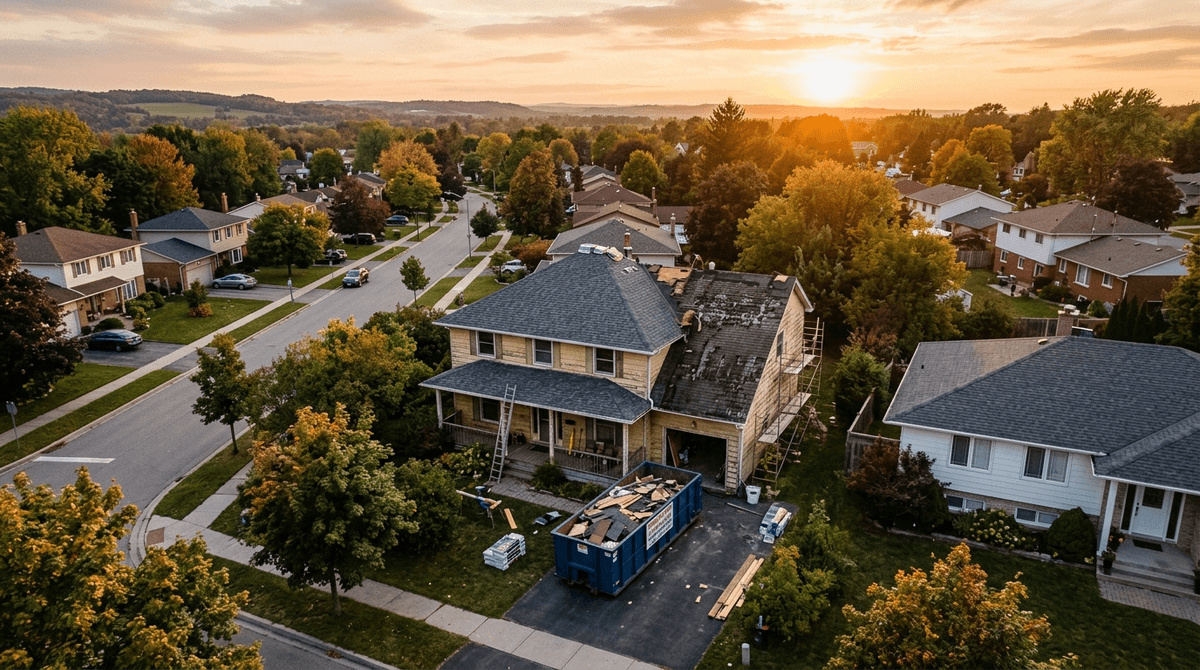
A solid house flip budget template is the difference between a profitable flip and a money pit. Every experienced flipper has a story about the deal that looked great on paper until the numbers fell apart mid-renovation — and nine times out of ten, the problem wasn't the market. It was the budget.
If you're flipping houses (or thinking about it), you need a budget system that forces you to account for every cost category before you write an offer. Not after closing. Not when the contractor sends you a change order. Before.
This post walks through exactly how to build a house flip budget that works, what categories most flippers miss, and how to use a template to keep every project profitable.
Why Most Flip Budgets Fail
The number one reason flip budgets blow up isn't bad estimating — it's incomplete estimating. New flippers tend to focus on the obvious renovation costs (kitchens, bathrooms, flooring) and forget about the dozens of smaller line items that add up fast.
Here's what typically gets missed:
Carrying costs are the silent budget killer. Every month you hold a property, you're paying the mortgage, insurance, utilities, and property taxes. A flip that takes two months longer than planned can eat $5,000-$15,000 in carrying costs alone, depending on your market.
Closing costs on both ends. You pay closing costs when you buy and when you sell. Most new flippers budget for the purchase closing costs but underestimate (or completely forget) the selling side — agent commissions, title insurance, transfer taxes, and seller concessions.
Permits and inspections. If your renovation touches electrical, plumbing, or structural elements, you're pulling permits. Budget $500-$3,000 depending on scope and municipality. Skip this line item and you're either eating the cost or — worse — skipping permits and creating liability.
Contingency. If your budget doesn't have a contingency line, it's not a budget. It's a wish list. The industry standard is 10-15% of your total renovation cost set aside for surprises. Experienced flippers who know their market and their contractors might get away with 10%. Everyone else should use 15%.
The Categories Your Flip Budget Must Include
A complete house flip budget has three sections: acquisition costs, renovation costs, and holding/selling costs. Miss any section and your profit projection is fiction.
Acquisition Costs
This is everything it takes to get the property into your name and ready for work to begin.
- Purchase price — The number you negotiate. This is the foundation of your entire deal analysis.
- Closing costs (buy side) — Title search, title insurance, attorney fees, recording fees, transfer taxes. Typically 1-3% of purchase price.
- Financing costs — Loan origination fees, points, appraisal fees. Hard money lenders typically charge 2-4 points plus 10-14% interest. If you're paying cash, this section is zero — but your opportunity cost isn't.
- Inspection costs — Home inspection ($300-$500), plus any specialist inspections (sewer scope, structural engineer, mold testing). Always get inspections before closing, not after.
Renovation Costs
This is where most of the budget lives. Break it down by trade or system, not by room. Organizing by trade makes it easier to get accurate bids and track spending against your plan.
- Demolition and cleanout — Dumpster rentals, demo labor, hazardous material abatement (asbestos, lead paint). A 30-yard dumpster runs $400-$600 per pull in most markets.
- Structural — Foundation repairs, framing, load-bearing wall modifications. This is where deals go sideways fast. Get a structural engineer's opinion before you budget this line.
- Roofing — Full replacement, repairs, or just flashing and sealant. A full tear-off and reshingle on a 2,000 sq ft ranch runs $8,000-$15,000 depending on your market.
- Electrical — Panel upgrades, rewiring, fixture installation. A full rewire on an older home can run $8,000-$15,000. Budget for the permit separately.
- Plumbing — Supply line replacement, drain repairs, fixture installation, water heater. Re-piping a whole house runs $4,000-$10,000.
- HVAC — System replacement, ductwork, registers. A new furnace and AC system installed runs $6,000-$12,000 for a standard residential home.
- Insulation and drywall — Blown-in insulation, batt insulation, drywall hanging and finishing. New drywall throughout a house adds up faster than you'd expect.
- Flooring — Hardwood, LVP, tile, carpet. Material costs vary wildly. LVP is the flip-friendly sweet spot for most markets: $2-$5/sq ft installed.
- Kitchen — Cabinets, countertops, backsplash, appliances, sink and faucet. A mid-range kitchen renovation runs $15,000-$30,000. Don't over-improve for the neighborhood.
- Bathrooms — Vanity, toilet, tub/shower, tile, fixtures. Budget $5,000-$12,000 per bathroom for a solid mid-range renovation.
- Paint (interior and exterior) — A full interior paint job on a 1,500 sq ft house runs $3,000-$6,000 for labor and materials. Exterior depends heavily on siding condition.
- Exterior and landscaping — Siding repairs, gutters, driveway, basic landscaping, power washing. Curb appeal sells houses — don't skip this.
- Permits — Pull a line item specifically for permits. Don't bury this in each trade's estimate or you'll lose track.
- Contingency (10-15%) — Calculate this as a percentage of your total renovation costs. This isn't optional.
Holding and Selling Costs
These are the costs between acquisition and closing on the sale. They're the most commonly underestimated section.
- Mortgage/hard money interest — Monthly payments for the duration of the project plus your listing period. If you're using hard money at 12% on a $200,000 loan, that's $2,000/month in interest alone.
- Property taxes — Pro-rated for the months you hold. Check the county assessor for the current rate.
- Insurance — Builder's risk or vacant property insurance. Standard homeowner's insurance won't cover a flip. Budget $150-$300/month.
- Utilities — Electric, gas, water, trash. You need these on during renovation. Budget $300-$500/month.
- HOA fees — If applicable. These add up fast on condos and townhomes.
- Staging — Optional but often worth it. Professional staging runs $2,000-$5,000. Virtual staging is $100-$300 per photo if you want to keep costs down.
- Agent commission (sell side) — Budget 5-6% of your ARV. Even if you're listing yourself, the buyer's agent still gets paid.
- Closing costs (sell side) — Title insurance, transfer taxes, attorney fees, seller concessions. Budget 1-2% of sale price.
How to Use the Template: The 70% Rule Check
Once your budget is filled in, run the 70% rule as a sanity check. The formula is simple:
Maximum Purchase Price = (ARV × 0.70) − Renovation Costs
ARV is your After Repair Value — what the house will sell for after renovations. If a house has an ARV of $300,000 and your total renovation budget is $50,000, your maximum purchase price is:
($300,000 × 0.70) − $50,000 = $160,000
The 70% rule builds in room for your holding costs, selling costs, and profit. It's not perfect for every market — in competitive markets you might run tighter, and in slower markets you might need more margin — but it's the right starting point.
If your budget template shows a deal that doesn't pass the 70% rule, either renegotiate the purchase price, reduce your renovation scope, or walk away. The best flippers make their money by saying no to bad deals, not by hoping a thin margin works out.
Common Budget Mistakes (and How to Fix Them)
Mistake #1: Budgeting from one contractor bid. Get three bids minimum for any job over $5,000. Not just for pricing — for scope validation. If two contractors say you need a full rewire and one says you can get away with a panel upgrade, dig deeper.
Mistake #2: No time buffer. Your budget should include a time contingency, not just a cost contingency. If your renovation timeline is 8 weeks, budget carrying costs for 12 weeks. Contractors run late. Inspections get delayed. Weather happens.
Mistake #3: Forgetting the "small stuff." Doorknobs, light switch plates, outlet covers, smoke detectors, house numbers, mailbox. None of these are expensive individually, but a full house of finish details can easily add $1,000-$2,000 to your budget.
Mistake #4: Over-improving. Your renovation should match the neighborhood. Putting $80,000 into a kitchen renovation in a $250,000 neighborhood is burning money. Look at comparable sales and renovate to that standard — not above it.
Mistake #5: Not tracking actuals against budget. A template is only useful if you update it as money goes out the door. Track actual spend against budgeted amounts weekly. If one category is running over, you need to know immediately so you can cut somewhere else.
Tracking Your Budget in Real Time
A spreadsheet works fine for planning, but it falls apart when you're managing the project day-to-day. You end up with multiple versions, manual updates, and numbers that don't match your bank account.
That's where project management software built for flippers makes a difference. PropertyHQ's house flipping module lets you set up your budget by category, track actual costs against estimates as invoices come in, and see your projected profit update in real time. When a plumbing change order hits, you see the impact on your bottom line immediately — not at the end of the project when it's too late to adjust.
The goal isn't to eliminate surprises (they'll always happen). It's to catch them early enough to make smart decisions about where to cut, where to hold firm, and whether the deal still makes sense.
The Bottom Line
Your flip budget is the most important document on every deal. More important than your contractor agreements, your design plans, or your ARV comps. If the budget is wrong, nothing else matters.
Build your budget before you make an offer. Include every cost category — acquisition, renovation, and holding/selling. Add a 10-15% contingency. Run the 70% rule. And track your actuals weekly once the project starts.
The flippers who consistently make money aren't the ones who find the best deals. They're the ones who know their numbers cold on every single project.
Frequently Asked Questions
- What should a house flip budget include?
- A complete house flip budget should include acquisition costs, renovation costs broken down by trade, carrying costs (mortgage, insurance, utilities, taxes), closing costs on both the purchase and sale, permit and inspection fees, staging costs, and a 15-20% contingency reserve for unexpected issues.
- How much contingency should you budget for a house flip?
- Budget 10-15% of your total renovation cost as contingency for unexpected issues. First-time flippers should use 15-20%. Even experienced flippers encounter surprises like hidden water damage, outdated electrical, or code violations that weren't visible during initial inspection.
- What are carrying costs in house flipping?
- Carrying costs are the ongoing expenses you pay every month you own a property: mortgage or hard money loan interest, property insurance, utilities, property taxes, and HOA dues if applicable. These costs can add $3,000-$10,000+ per month depending on your market and loan terms.
Ready to streamline your business?
PropertyHQ gives construction businesses the tools to manage jobs, invoices, and teams — all in one place.
View Pricing