How to Calculate After-Repair Value (ARV) for House Flips
Learn how to calculate after-repair value (ARV) for house flips accurately. Step-by-step method, comp selection rules, and the mistakes that kill flipper profits.
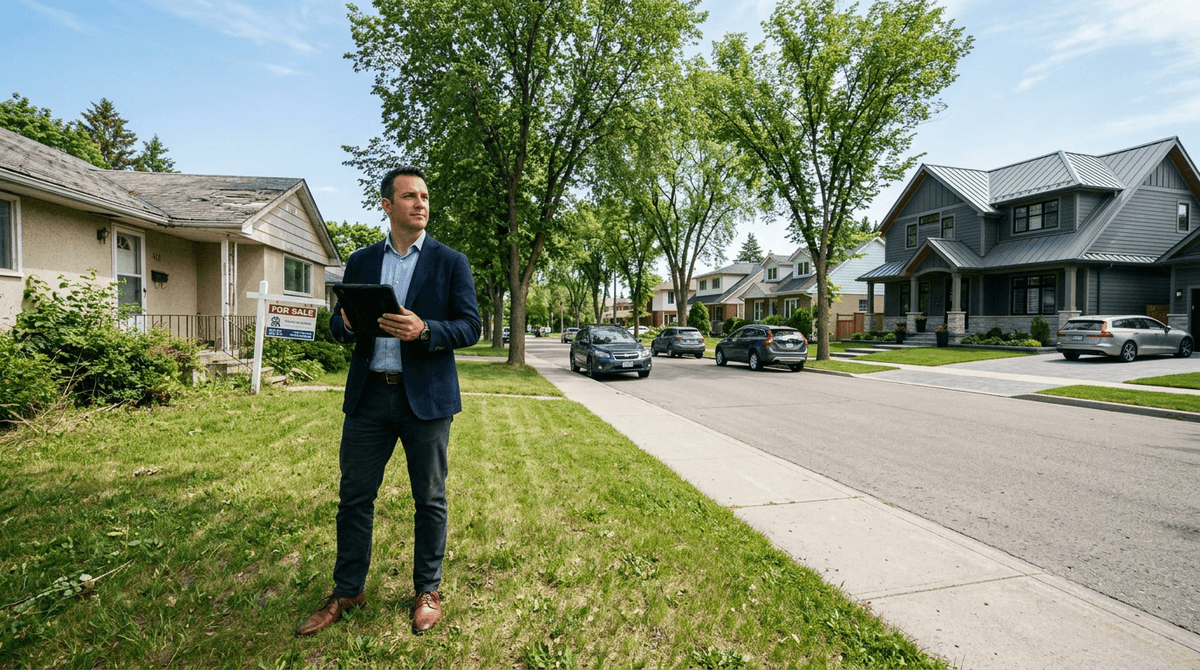
Learn how to calculate after-repair value (ARV) correctly and you'll avoid the single biggest mistake new house flippers make: overpaying on the front end because the resale projection was wishful thinking. Get the ARV right and the rest of the deal analysis falls into place. Get it wrong and no amount of renovation hustle will save the margin.
ARV — after-repair value — is the projected market value of a property once all planned renovations are complete. It's what the home will sell for, not what comparable homes are selling for today in their current condition. Every downstream number in a flip deal (maximum offer, rehab budget, profit projection) flows from this one calculation. This post walks through how to calculate ARV the way experienced flippers do, what makes a comp usable or useless, and the habits that separate accurate flippers from the ones who keep learning the same expensive lesson.
Why ARV Is the Foundation of Every Flip Deal
A flip is a forward-looking bet. You're not buying a house at its current value — you're buying it at a discount to what it will be worth after you've fixed it. ARV is the target. Every dollar you spend on acquisition, renovation, and carrying costs has to fit under that ceiling with enough room left over for profit.
Most flippers who lose money don't lose it because they overspent on cabinets. They lose it because their ARV was 10-15% too high from the start. By the time the property hits the market and sits for 90 days without an offer at the projected price, the carrying costs have eaten the spread and the only way out is a price cut that turns a projected 20% ROI into a break-even exit.
Accurate ARV protects you from that scenario before you ever write an offer. If the numbers don't work at a realistic ARV, you walk — no matter how attractive the property looks.
The Comp-Based Method: How Experienced Flippers Calculate ARV
There are several ways to estimate ARV, but only one is reliable enough to bet capital on: comparable sales analysis. You pull recent sold properties similar to what your subject property will be after renovation, and you use their sale prices to project yours.
Here's the process step by step.
Step 1: Define the Subject Property's Post-Renovation Profile
Before you can find comps, you need to know what the property will look like when you're done. Not what it is today — what it will be.
Document the post-renovation profile: square footage (including any additions), bedroom and bathroom count, garage, lot size, and finish level (basic, mid-grade, or high-end). If you're adding a bedroom or finishing a basement, your comps need to reflect that. If you're doing a light cosmetic flip on a dated home, your comps should be similar in quality to what you'll deliver — not the ultra-high-end remodel down the street.
Step 2: Pull 3-6 Sold Comps
The rule is simple: sold, similar, recent, nearby.
Sold, not active or pending. Active listings tell you what sellers are asking. Sold listings tell you what buyers actually paid. Only sold comps count for ARV.
Similar in size and layout. Stay within 20% of the subject property's square footage. A 1,200 sqft ranch is not a comp for a 2,400 sqft two-story, even if they're on the same block. Match bedroom and bathroom counts when possible.
Recent — within the last 3-6 months. Markets move. A sale from 12 months ago in a rising market will undershoot your ARV; in a falling market, it will overshoot. If you can only find comps that are 6+ months old, you need to adjust for market direction.
Within a half-mile radius. Neighborhood matters enormously. School district lines, zoning transitions, and commercial corridors can change values dramatically across a quarter-mile. Stay tight geographically and expand only if the neighborhood is genuinely homogeneous.
Step 3: Adjust the Comps
No two properties are identical. You adjust for the differences.
Common adjustments include garage (add or subtract $10,000-$25,000 depending on market), extra bedroom (add $15,000-$40,000), extra bathroom (add $10,000-$20,000), lot size (varies by market), and finish level. A comp with quartz countertops and hardwood floors is worth more than a comp with laminate and vinyl — adjust downward if your comp is nicer than what you're delivering, upward if it's more basic.
Be honest. The single biggest mistake new flippers make is adjusting comps upward to get to a number they want instead of a number the market supports.
Step 4: Calculate Price Per Square Foot, Then Apply It
For each adjusted comp, calculate price per square foot: sale price divided by above-grade finished square footage. Average the price-per-square-foot across all your comps, then multiply by your subject property's square footage.
Example: Three comps sold for $380, $405, and $392 per square foot. Average is $392. Subject property post-renovation will be 1,450 sqft. Projected ARV is $392 × 1,450 = $568,400.
Round that number down, not up. Your ARV estimate should be conservative, not aspirational.
Common ARV Mistakes That Wreck Flip Deals
Even flippers who know the formula mess up the execution. Here are the mistakes that show up most often.
Using active comps or Zillow Zestimates. Neither is reliable. Active listings reflect seller hopes; Zestimates are automated algorithms that miss renovation value, neighborhood nuance, and recent updates. Pull sold data from MLS or a title company — that's ground truth.
Ignoring market direction. If prices in the area have moved 5% over the last six months, your six-month-old comps are stale. Check the trend before you anchor to a number.
Mismatching finish level. A flipper who plans a mid-grade rehab and comps against high-end renovated homes will project an ARV that requires a much bigger renovation budget than they planned. Your comps have to match what you'll actually deliver, not the aspirational version of the project.
Comping outside the neighborhood. Crossing a school district line, a busy road, or a zoning boundary can swing prices 10-20%. A comp two blocks away in a different subdivision may not be a comp at all.
Forgetting to pressure-test with a real agent. Before you close on the purchase, walk the numbers through a local listing agent who knows the submarket. A sharp agent will tell you in five minutes whether your projected ARV is realistic, too aggressive, or too conservative.
Using ARV to Calculate Your Maximum Offer
Once you have ARV, the 70% rule tells you the most you can pay and still hit a healthy profit margin.
Maximum Allowable Offer (MAO) = (ARV × 0.70) − Renovation Costs
That 30% cushion covers closing costs on both ends (around 8-10%), holding costs during renovation and sale, financing costs if you're using a hard money loan, and your target profit. In expensive markets with fast turnover, experienced flippers sometimes relax to 75% of ARV. In slower markets or for first-time flippers, 65% is safer.
If the seller won't accept your MAO, the deal isn't a deal. Walk.
Track ARV, Rehab Budget, and Actual Resale in One Place
The flippers who improve their ARV accuracy over time are the ones who track the full loop: projected ARV, projected rehab budget, actual rehab cost, list price, and final sale price. After five or six flips, patterns emerge — maybe you consistently underestimate plumbing costs, or consistently overshoot ARV in one submarket. You only see those patterns if you're recording the data.
PropertyHQ's house flipping module is built for exactly this. Every flip gets tracked end-to-end — acquisition cost, renovation budget, actual spend by trade, projected ARV, and final sale price. Over time you build a personalized dataset that makes your next deal analysis more accurate than the last one. That feedback loop is what turns a first-time flipper into a full-time flipper.
The Bottom Line
ARV isn't a guess. It's a calculation built from real comparable sales, adjusted for real differences, and pressure-tested against market reality. Do it carefully and the rest of the deal analysis is straightforward. Skip it or fudge it, and you're betting on luck — which is a very expensive strategy in real estate.
Before you write your next offer, walk through the comp analysis one more time. Pull the sold data. Check the distance, the age, the size match, and the finish level. Adjust honestly. Round conservatively. If the numbers still work at a realistic ARV, you have a deal. If they don't, you have a lesson you didn't have to pay for.
Frequently Asked Questions
- What is ARV in real estate?
- ARV stands for After-Repair Value — the fair market value of a property after all planned renovations are complete. It's the projected resale price a flipper or investor will get when the home hits the market fully updated. ARV is the single most important number in a flip deal because it drives the maximum allowable offer and determines whether a project is actually profitable.
- How do you calculate ARV on a flip?
- To calculate ARV, pull 3-6 comparable sold properties (comps) within the last 3-6 months, located within a half-mile of the subject property, similar in square footage, bed/bath count, and finish level. Average the price-per-square-foot of the comps and multiply by the subject property's square footage. Adjust up or down for differences in lot size, garage, condition, or major features.
- What is the 70% rule based on ARV?
- The 70% rule states that your maximum offer on a flip should be no more than 70% of ARV minus renovation costs. If ARV is $350,000 and repairs cost $60,000, your maximum offer is ($350,000 × 0.70) − $60,000 = $185,000. The 30% cushion absorbs closing costs, holding costs, selling costs, and profit.
- How accurate should an ARV estimate be?
- A solid ARV estimate should be within 3-5% of the actual resale price. Anything wider than 10% usually means bad comp selection, not enough comps, or a market that's moving faster than the data can keep up with. If you can't find comparable sales within a half-mile in the last 6 months, widen the radius before widening the time window — neighborhood character changes more slowly than local market prices.
Ready to streamline your business?
PropertyHQ gives construction businesses the tools to manage jobs, invoices, and teams — all in one place.
View Pricing