How to Estimate House Flip Costs (Without Blowing Your Budget)
A practical guide to estimating rehab costs for house flips. Learn which cost categories matter most, common budgeting mistakes, and how to build a reliable estimate before you buy.
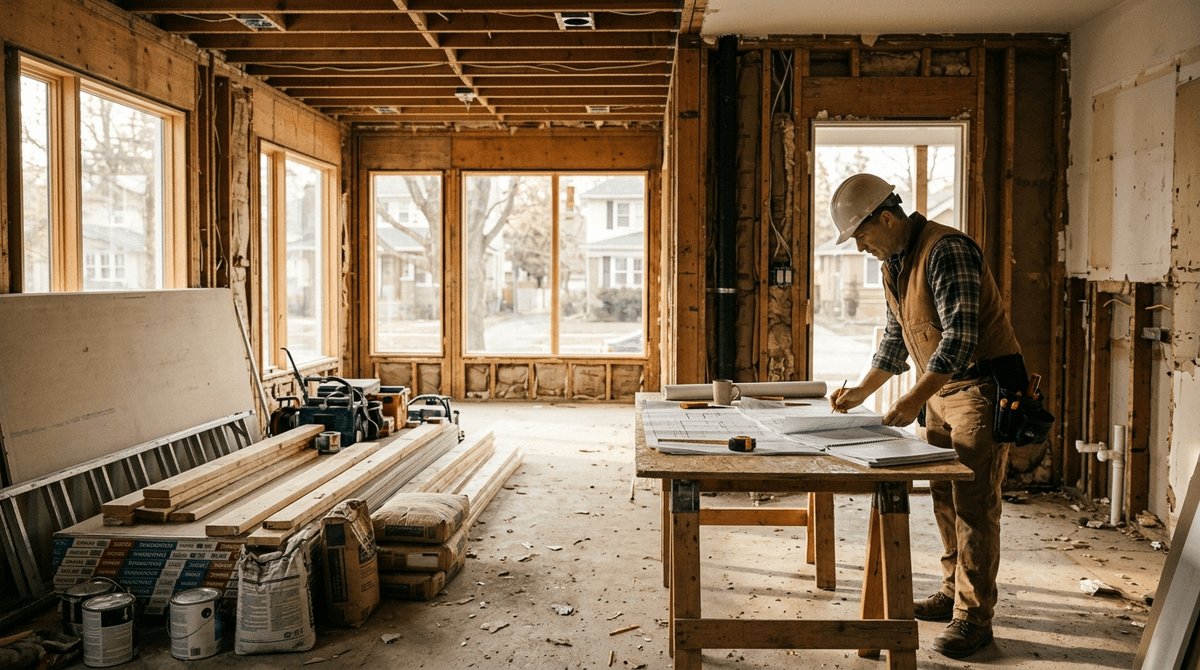
Every experienced flipper has a story about the deal that looked great on paper — until the budget blew up. Accurate cost estimation is the difference between a profitable flip and an expensive lesson.
This guide covers how to build a reliable rehab estimate before you commit to a property, the cost categories most flippers underestimate, and a framework you can reuse on every deal.
Start With the ARV, Work Backwards
Before you estimate costs, you need to know what the property will sell for after repairs. This is your After Repair Value (ARV). Pull comparable sales from the last 90 days within a half-mile radius, adjusting for square footage and finishes.
A common rule of thumb is the 70% rule: your maximum purchase price should be 70% of ARV minus repair costs. For example, if the ARV is $300,000 and estimated repairs are $50,000, your max offer is $160,000.
The 70% rule is a starting point, not gospel. In competitive markets you may need to work tighter. In slower markets you might have more room. The point is to anchor your budget to a realistic exit price.
The Five Cost Categories
Break every estimate into five buckets:
1. Structural and Systems
This is the expensive stuff: foundation, roof, HVAC, plumbing, and electrical. These costs are hard to cut and easy to underestimate. Always get a professional inspection before you buy, and budget 10-15% above the inspector's estimate for surprises.
2. Cosmetic Finishes
Flooring, paint, countertops, fixtures, and tile. This is where most of your visual transformation happens. The key is knowing your buyer — luxury vinyl plank and quartz countertops hit the sweet spot for most markets without the cost of hardwood and marble.
3. Kitchen and Bathrooms
These rooms sell houses. Budget 30-40% of your total rehab spend here. A kitchen remodel in a mid-range flip typically runs $15,000-$30,000 depending on scope. Bathrooms run $5,000-$15,000 each.
4. Exterior and Curb Appeal
Landscaping, exterior paint, front door, garage door, and driveway. First impressions matter for appraisals and buyer interest. Budget $3,000-$10,000 for exterior work on a typical single-family flip.
5. Carrying Costs and Soft Costs
The costs that keep running while you work: loan interest, insurance, utilities, property taxes, permits, and closing costs on both the buy and sell side. These add up fast — a typical flip that takes 4-6 months can rack up $10,000-$20,000 in carrying costs alone.
Common Estimation Mistakes
Ignoring permit costs and timelines. Permits add cost and weeks to your timeline. Budget for both the fees and the extended carrying costs.
Using national averages for local work. Labor rates vary dramatically by market. A plumber in Austin costs different than a plumber in Cleveland. Build relationships with local contractors and use their actual quotes.
Skipping the contingency. Always add 10-15% to your total estimate as a contingency. If you don't need it, great — that's extra profit. If you do need it, you just saved the deal.
Estimating in your head. Write it down. Every line item, every cost. A spreadsheet or project management tool keeps you honest and gives you data for your next flip.
Build Your Estimate Template
A reusable estimate template saves time and improves accuracy with each deal. Your template should include every line item you've ever encountered, even if most deals only use a subset.
The best flippers track their estimated vs. actual costs on every deal and refine their template over time. After 5-10 flips, your estimates get remarkably accurate because you're working from real data, not guesswork.
The Bottom Line
Accurate estimation isn't about being perfect — it's about being consistently close enough to protect your margins. Start with the ARV, work backwards, break costs into categories, add your contingency, and track your actuals.
The flippers who make money consistently aren't the ones who find the best deals. They're the ones who estimate accurately and execute on budget.
Frequently Asked Questions
- How much does it cost to flip a house on average?
- The average rehab cost for a house flip ranges from $20,000 to $75,000, depending on the property condition and scope of work. Cosmetic flips (paint, flooring, fixtures) run $15,000 to $30,000, while full gut renovations with structural or systems work can exceed $100,000.
- What is the 70% rule in house flipping?
- The 70% rule states that your maximum purchase price should be 70% of the After Repair Value (ARV) minus estimated repair costs. For example, if a property's ARV is $300,000 and repairs will cost $50,000, your maximum offer should be $160,000.
- What costs do house flippers most commonly underestimate?
- The most underestimated costs are holding costs (loan interest, insurance, utilities, and taxes while you own the property), permit and inspection fees, and a contingency buffer. Most experienced flippers recommend adding 15-20% to your initial estimate for unexpected issues.
- Can software help estimate house flip costs?
- Yes. Construction management software like PropertyHQ includes AI-powered estimating that generates detailed cost breakdowns from a plain-English job description. This helps flippers build accurate budgets faster and track actual costs against estimates as the project progresses.
Ready to streamline your business?
PropertyHQ gives construction businesses the tools to manage jobs, invoices, and teams — all in one place.
View Pricing