How to Grow a Plumbing Business: Practical Strategies That Actually Work
A no-nonsense guide to growing a plumbing business. Covers pricing strategy, hiring, marketing, recurring revenue, and operational improvements that move the needle.
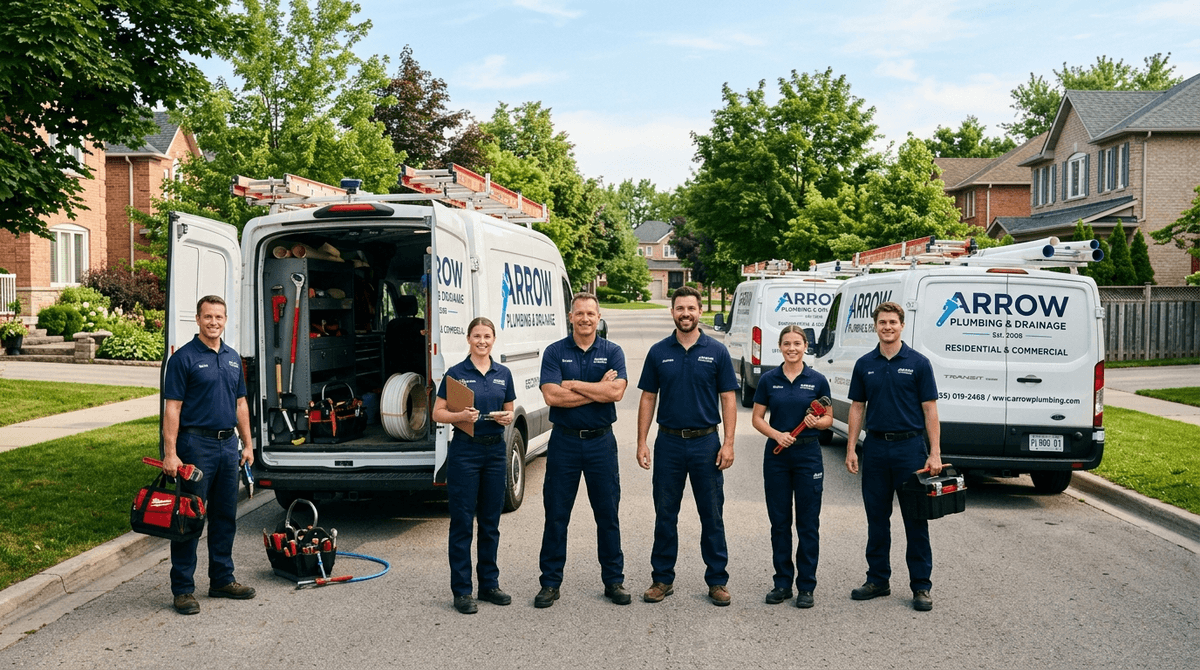
Growing a plumbing business is different from being a good plumber. Plenty of skilled tradespeople start their own company, do great work, and still plateau at the same revenue year after year. The bottleneck is almost never the quality of the work — it's the business systems around it.
If you're stuck in the cycle of "too busy to grow but not profitable enough to hire," this guide is for you. These aren't theoretical strategies from a business textbook. They're the moves that plumbing businesses making $500K-$5M actually use to break through to the next level.
Fix Your Pricing Before You Fix Anything Else
Most plumbing businesses undercharge. Not by a little — by a lot. The most common reason is pricing based on what feels right instead of what the numbers demand.
Here's the math that matters: add up every fixed cost your business has per month — rent, insurance, vehicle payments, licensing, software, phone bills, your own salary. That's your overhead. Now divide that by the number of billable hours you can realistically sell in a month (hint: it's lower than you think — account for drive time, estimates, callbacks, and admin). That's your true hourly cost before any profit.
Most plumbers who do this calculation for the first time discover their hourly cost is $85-$120, which means charging $75/hour is literally losing money. You're subsidizing your customers' plumbing with your own savings.
The fix isn't complicated: know your numbers, price to a minimum margin (30-40% gross profit on labor, 25-30% markup on materials), and be willing to lose the customers who only shop on price. Those customers were never profitable anyway.
If you're still doing time-and-materials pricing for everything, consider moving your most common services to flat-rate. Flat-rate pricing is easier for customers to approve, eliminates "watching the clock" anxiety, and rewards you for being efficient instead of penalizing you.
Build Recurring Revenue with Service Agreements
The plumbing businesses that grow fastest share one trait: recurring revenue. Service agreements — also called maintenance plans or preventive maintenance contracts — are the single best way to build predictable income in the trades.
A basic residential plumbing maintenance agreement might include an annual inspection, water heater flush, drain cleaning, and priority scheduling. Price it at $15-25/month or $150-250/year. At those numbers, the agreement is easy for homeowners to say yes to, and the inspection visit gives you eyes on their plumbing system — which generates repair and replacement leads naturally.
If you sign 100 agreements at $200/year, that's $20,000 in predictable annual revenue. More importantly, those 100 customers call you first when something breaks. They don't Google "plumber near me" — they call their plumber. That's the real value.
Commercial maintenance agreements are even more lucrative. Restaurants, apartment buildings, and property management companies need regular grease trap pumping, drain maintenance, and fixture inspections. These contracts can run $500-$5,000/month depending on the property, and they're sticky — once you're the maintenance plumber for a building, you keep that contract for years.
Hire Before You Think You're Ready
Every growing plumbing business hits the same wall: the owner is maxed out, turning down work, and still can't justify a hire because the revenue isn't quite there yet. This is the trap. Revenue won't grow because you can't take more work. You can't take more work because you don't have help. Something has to give.
The answer is almost always to hire before you feel ready. Not recklessly — but if you're consistently turning down two or more jobs per week, you're leaving enough revenue on the table to cover a helper's wages.
Start with an apprentice or a helper, not a journeyman. The hourly cost is lower, and you can train them to your standards. Your first hire doesn't need to run jobs solo — they need to make you faster on the jobs you're already doing. If a helper saves you an hour per job and you do four jobs a day, that's four extra billable hours freed up every day.
The second hire is the harder one. That's when you go from "plumber with a helper" to "plumbing company owner." You'll need systems — standard operating procedures, job checklists, quality control processes — because the work is no longer happening under your direct supervision. This is where most plumbing businesses either level up or retreat back to being a one-truck operation.
Get Your Marketing Right (It's Simpler Than You Think)
Plumbing marketing doesn't need to be complicated. Your customers find you in three ways: Google search when something breaks, recommendations from people they trust, and seeing your truck in their neighborhood. Your marketing should focus on those three channels.
For Google, you need two things: a Google Business Profile that's complete and actively collecting reviews, and a website that shows up when someone searches "plumber near me" or "plumbing company [your city]." That's the baseline. If you don't have those two things working, nothing else in marketing matters yet.
Reviews are the highest-leverage marketing activity in plumbing. After every job, ask for a Google review. Make it easy — text the customer a direct link. Aim for 50+ reviews with a 4.8+ average and you'll dominate local search in most markets. Every review is free advertising that works 24/7.
For referrals, make it formal. Tell your best customers: "If you refer someone to us, we'll give you $50 off your next service call." Simple, trackable, and it turns your happiest customers into a sales team that costs you almost nothing.
Truck wraps are underrated. A clean, professional wrap with your name, phone number, and a short tagline ("Emergency plumbing, done right") generates calls from people who see it parked in their neighbor's driveway. It's a one-time cost of $2,000-$4,000 that produces leads for years.
Don't bother with Facebook ads, Instagram content strategies, or TikTok until you've maxed out Google, reviews, and referrals. Those channels work, but they're secondary for a local service business.
Systematize Your Operations
Growth breaks whatever systems you had when you were smaller. The quoting process that worked when you did two estimates a week falls apart at ten. The invoicing method that was fine when you remembered everything in your head fails when you have two trucks running.
The contractors who grow past $500K in revenue without losing their minds have one thing in common: they systematize early. That means every repeatable task has a defined process, not a person holding it all in their head.
Job management software is the foundation. At minimum, you need a system that handles scheduling, estimating, invoicing, and customer communication in one place. Doing these in four different apps (or worse, on paper) creates gaps where money falls through — missed follow-ups, forgotten invoices, lost estimates.
For plumbing specifically, you want software that understands your trade. Generic field service tools work okay for simple service calls, but if you're doing new construction plumbing, remodels, or commercial work, you need something that handles project-level complexity — not just "dispatch, complete, invoice."
PropertyHQ's Plumbing module was built for this. It handles both service dispatch and project-based work, integrates with QuickBooks, and includes Rex AI for instant estimating and receipt parsing. The foreman portal gives your crew a mobile-first daily agenda with photo-required task completion — real accountability without micromanaging. And if you're running bilingual crews, the entire platform works in English and Spanish, including Rex. At $79.99/month for up to 5 team members, it's a fraction of what most plumbing businesses spend on software — or lose to inefficiency.
Track the Numbers That Matter
Revenue is a vanity metric. Profit is a sanity metric. Cash flow is the survival metric. Grow your plumbing business by tracking all three, but making decisions based on the last two.
The numbers that actually predict growth: gross profit margin per job type (are residential service calls more profitable than your commercial work, or vice versa?), average revenue per customer per year (are your best customers worth $200/year or $2,000?), close rate on estimates (are you winning 40% of your bids or 80%?), and days to collect payment (are you getting paid in 3 days or 30?).
Most plumbing businesses track none of these, which means they're growing blind. You don't need a fancy dashboard — a monthly review of these four numbers will tell you exactly where to focus.
The Path Forward
Growing a plumbing business isn't about one big breakthrough. It's about stacking small operational improvements over time: pricing correctly, building recurring revenue, hiring at the right moment, marketing in the channels that matter, and running systems that don't depend on one person remembering everything.
Start with whatever feels most urgent. If you suspect you're undercharging, fix pricing this week. If you're turning down work, start interviewing for a helper. If you have zero online reviews, text five recent customers today.
The plumbing businesses that grow aren't the ones with the fanciest marketing or the most trucks. They're the ones that treat the business side with the same professionalism they bring to the trade.
Frequently Asked Questions
- How do I grow my plumbing business?
- The fastest levers for growth are fixing your pricing to ensure profitability, building recurring revenue through service agreements, hiring your first technician to free yourself from the truck, and investing in local marketing that targets high-intent customers searching for plumbers in your area.
- How much should a plumber charge per hour?
- Your hourly rate should cover your fully loaded overhead (insurance, vehicles, tools, licensing, office costs, your salary) plus a 30-40% gross profit margin on labor. Most plumbing businesses discover their true hourly cost is $85-$120, meaning charging less than $125-$150 per hour is likely losing money.
- Are plumbing service agreements worth it?
- Yes. Service agreements create predictable recurring revenue, reduce customer acquisition costs, and increase close rates on larger jobs. A plumbing business with 200 active agreements at $150-$200 per year generates $30,000-$40,000 in guaranteed annual revenue and has a significantly higher business valuation.
- When should a plumber hire their first employee?
- Hire when you're consistently turning away work or when your schedule is booked 3-4 weeks out. The math should show that adding a technician who generates $150,000+ in annual revenue at 50-60% gross margins more than covers their fully loaded cost of $55,000-$75,000 including wages, benefits, vehicle, and tools.
Ready to streamline your business?
PropertyHQ gives construction businesses the tools to manage jobs, invoices, and teams — all in one place.
View Pricing