HVAC Maintenance Agreement Template: Lock In Recurring Revenue
Free HVAC maintenance agreement template with clause-by-clause breakdown. Build service contracts that protect your business and keep customers coming back.
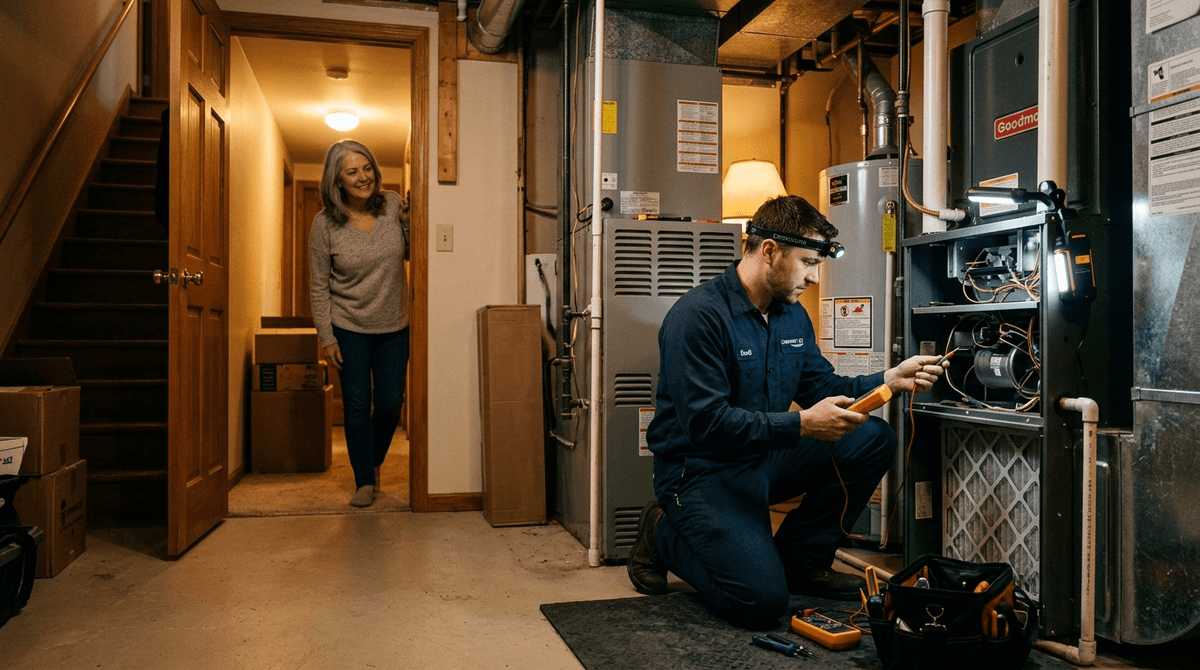
A solid HVAC maintenance agreement template is the fastest path to predictable revenue in the trades. If you're still running your HVAC business on one-off service calls and hoping the phone rings, you're leaving serious money on the table — and building a business that's impossible to forecast.
Maintenance agreements (also called service contracts or planned maintenance plans) create a recurring revenue stream that smooths out the seasonal roller coaster every HVAC contractor knows too well. You fill your slow months, reduce your customer acquisition costs, and build a book of business that has real value if you ever want to sell.
This post breaks down exactly what goes into a maintenance agreement that works — the clauses you need, the pricing math, and the mistakes that cost HVAC contractors money.
Why Maintenance Agreements Matter for HVAC Businesses
The economics of maintenance agreements are hard to argue with. Acquiring a new customer costs 5-7x more than keeping an existing one. A maintenance agreement locks in that relationship for at least a year, usually with auto-renewal.
Here's what a healthy agreement program does for your business:
Predictable cash flow. If you have 200 agreements at $180/year, that's $36,000 in guaranteed revenue before you sell a single repair or replacement. That covers a truck payment, insurance, and a tech's base wages — every single year.
Higher close rates on replacements. Agreement customers trust you. When you tell them their 18-year-old furnace needs to be replaced, they're not calling three other companies for quotes. They've been working with you for years. Your replacement close rate on agreement customers will typically run 60-75%, compared to 30-40% for cold service calls.
Reduced seasonal swings. The shoulder seasons (spring and fall) are when most HVAC companies bleed. Maintenance agreements give you scheduled work during exactly those months — fall tune-ups before heating season, spring check-ups before cooling season.
Business valuation. If you ever want to sell your HVAC business, recurring revenue through maintenance agreements is one of the first things a buyer looks at. A company with 500 active agreements is worth significantly more than one doing the same revenue on all one-off calls.
What Every HVAC Maintenance Agreement Must Include
A maintenance agreement isn't just a handshake and a promise to show up twice a year. It's a legal document that defines what you will and won't do, what the customer is paying for, and what happens when things go sideways. Here are the clauses you can't skip.
Scope of Service
This is the core of the agreement. Spell out exactly what each maintenance visit includes. Be specific — vague language leads to arguments and scope creep.
A standard residential HVAC maintenance visit should cover:
Heating system tune-up (fall visit): Inspect heat exchanger for cracks, test gas pressure, clean and adjust burners, check ignition system, test safety controls, inspect flue and venting, replace standard air filter (1" disposable), check thermostat calibration, measure supply and return air temperatures.
Cooling system tune-up (spring visit): Clean condenser coil, check refrigerant levels (top-off not included unless specified), inspect electrical connections and tighten, measure amp draw on motors, check capacitors, clean condensate drain, inspect ductwork connections at unit, test thermostat operation.
The key phrase is "standard maintenance." Anything beyond what's listed — refrigerant, parts replacement, duct cleaning, new thermostats — is additional work billed at your standard or discounted rate.
Pricing and Payment Terms
There are three common pricing structures for HVAC maintenance agreements. Each has trade-offs.
Annual lump sum. Customer pays once per year, typically $149-$249 for a single system (one furnace and one AC). Simple for you, simple for them. Downside: some customers balk at the upfront cost, and you might see cancellations after the first visit if they feel they got the "valuable" service and don't need the second.
Monthly subscription. Customer pays $15-$25/month per system. Lower barrier to entry, better retention (people forget about $18/month charges). Downside: more billing administration and higher payment processing costs. You need software to manage recurring billing efficiently.
Per-visit pricing. Customer pays at each visit, usually $89-$129 per tune-up. This is essentially a discount off your standard service call rate. Downside: it's not really an agreement — it's just a discounted service. You lose the recurring revenue predictability.
For most HVAC businesses in the $500K-$3M revenue range, the monthly subscription model is the sweet spot. It maximizes retention, creates predictable monthly revenue, and the per-customer administration cost is negligible if you're using management software.
Your agreement should specify: the total annual cost, payment schedule, accepted payment methods, and what happens if a payment is missed (typically a 30-day grace period before the agreement is suspended).
Priority Service and Response Time
This is the main perk that sells agreements. Agreement customers get bumped to the front of the line when they need a repair.
Be careful about what you promise here. "Same-day service" sounds great in a sales pitch, but it's a commitment you'll struggle to keep during a July heat wave or a January cold snap — exactly when your agreement customers are calling.
A realistic promise: "Priority scheduling with next-business-day response during normal business hours. Emergency service available 24/7 with priority dispatching ahead of non-agreement customers." That gives you flexibility while still providing real value.
Discount on Repairs and Parts
Agreement customers should get a discount on any repairs or parts not covered by the maintenance visit itself. The industry standard is 10-15% off your retail repair rates and 10% off parts.
This discount isn't just a customer perk — it's a strategic move. When your tech finds a failing capacitor during a tune-up, a 15% discount makes it easy for the customer to say "go ahead and replace it now" rather than waiting for it to fail at 2 AM on a Saturday.
Don't go above 15%. You still need to make money on repairs. The agreement revenue covers your cost of the maintenance visit and customer retention — repairs and replacements are where the profit lives.
Term, Renewal, and Cancellation
Initial term: One year is standard. Trying to lock customers into multi-year agreements creates sales friction and, in some states, legal complications.
Auto-renewal: Your agreement should auto-renew annually unless the customer cancels in writing within 30 days of the renewal date. Auto-renewal is where retention happens. Most customers won't actively cancel — they'll just keep renewing year after year.
Cancellation policy: Keep this reasonable. A customer who wants to cancel mid-term should be able to, but you've already delivered (or scheduled) services. A common approach: if the customer cancels after receiving one of the two annual visits, they owe the retail price of that visit minus what they've already paid. If they cancel before any service has been performed, full refund minus a small administrative fee ($25-$50).
Price increases: Include a clause that allows you to increase the agreement price at renewal, typically with 30-60 days' written notice. You don't want to be locked into 2026 pricing in 2029 when your labor costs have gone up 20%.
Exclusions and Limitations
This section protects you. Be explicit about what the agreement does not cover:
- Refrigerant (charge per pound at current market rate)
- Parts and components beyond standard filters
- Duct cleaning, duct sealing, or duct modification
- Equipment replacement or major repairs
- Damage caused by improper use, power surges, or acts of nature
- Systems not accessible due to storage, construction, or other obstructions
- Systems beyond their expected service life (optional — some contractors exclude systems over 20 years)
- Pre-existing conditions not disclosed at the time of agreement
That last point matters. If you sign an agreement on a system that's already failing, the customer might expect you to fix it under the agreement terms. Your first visit should include a system condition report, and any pre-existing issues should be documented and excluded from coverage.
Liability and Warranty
Include a standard limitation of liability clause. Your agreement covers maintenance — it doesn't guarantee the system won't break. If the furnace fails three days after a tune-up, you're not liable for the replacement, hotel costs, or anything else beyond coming back to diagnose the issue.
Also specify that your maintenance does not extend or replace the manufacturer's warranty. If the customer has a system under manufacturer warranty, your maintenance helps keep that warranty valid (most manufacturers require annual maintenance), but you're not the warranty provider.
Pricing Your Agreements: The Math That Matters
Pricing maintenance agreements wrong is the fastest way to lose money on a program that's supposed to make money. Here's how to think about it.
Your cost per visit: Calculate your fully loaded cost to put a technician on-site for a tune-up. Include the tech's hourly rate (with benefits and overhead), drive time, vehicle cost, filter cost, and any materials used. For most markets, this lands at $75-$120 per visit.
Two visits per year cost: $150-$240 in direct costs per agreement.
Your agreement price: Should be 1.5-2x your direct cost. At $180/year, you're making slim margin on the visits themselves. At $240/year, you've got breathing room. The real profit comes from the repairs, replacements, and referrals these customers generate — not from the maintenance visits.
Break-even analysis: If your agreement program has 100 customers at $200/year, that's $20,000 in revenue against roughly $16,000-$20,000 in direct service costs. Thin, right? But those 100 customers will generate an estimated 40-60 repair calls per year at full (or slightly discounted) rates, and 10-15 replacement leads. That's where your program pays for itself three or four times over.
Don't underprice to get sign-ups. An agreement at $99/year sounds attractive to customers, but you're losing money on every visit. You'll build a big book of agreements that drains your business instead of feeding it.
Common Mistakes HVAC Contractors Make With Agreements
Mistake #1: Not selling agreements on every service call. Every time a tech is in a home for a repair, that's a sales opportunity for a maintenance agreement. If your techs aren't trained to present the agreement — and incentivized to close — you're leaving recurring revenue on the table on every single call.
Mistake #2: No system for tracking renewals. If you're managing 50+ agreements on spreadsheets or paper files, you're losing customers to missed renewals and missed visits. You need software that tracks agreement status, schedules visits automatically, processes recurring payments, and alerts you when a renewal is coming up.
Mistake #3: Overpromising on response times. "Guaranteed 2-hour response" during peak season will either burn out your team or force you to break promises. Underpromise and overdeliver. If you promise next-business-day and show up same-day, the customer is thrilled. If you promise same-day and show up the next morning, they're frustrated.
Mistake #4: Not documenting system condition at sign-up. The first maintenance visit under a new agreement should include a thorough system inspection with photos and notes. Document everything. This protects you from customers who sign up because they know something is about to fail and expect you to cover it.
Mistake #5: Treating agreements as a sideline. The most profitable HVAC companies treat their maintenance agreement program as a core business unit with its own revenue targets, retention metrics, and growth plan. It's not a nice-to-have — it's the foundation of your recurring revenue.
Managing Agreements at Scale
When you have 20 agreements, a spreadsheet works. When you have 200, it doesn't. And if you're serious about growing your HVAC business, 200 should be your first milestone, not your ceiling.
PropertyHQ's HVAC module is built to handle maintenance agreements from sign-up to renewal. Track every agreement, schedule visits automatically based on the agreement terms, process recurring billing, and see your agreement revenue and renewal rates on a single dashboard. When a tech completes a maintenance visit, the system updates the agreement status and can trigger the next scheduled visit — no manual tracking, no missed appointments.
The contractors who build serious agreement programs are the ones who have systems to manage them. The selling is the easy part. The operations — scheduling, billing, renewals, documentation — are what separate a 50-agreement side program from a 500-agreement revenue engine.
The Bottom Line
An HVAC maintenance agreement template isn't just a document — it's the blueprint for the most valuable part of your business. Recurring revenue, loyal customers, higher replacement close rates, and a business that's worth something when you're ready to step back.
Get the agreement right from the start. Include every clause covered above, price it so you make money, and build systems to manage it at scale. Your future self (and your accountant) will thank you.
Frequently Asked Questions
- What should an HVAC maintenance agreement include?
- An HVAC maintenance agreement should include the number of visits per year (typically 2), what each visit covers (inspection checklist, filter replacement, coil cleaning), response time guarantees for service calls, parts and labor discount percentages, agreement term and renewal terms, and cancellation policy.
- How much should I charge for an HVAC maintenance agreement?
- Most residential HVAC maintenance agreements are priced between $150-$300 per year for a single system, with tiered pricing for additional systems. The agreement should be priced so that the maintenance visits cost you 40-50% of the agreement price, leaving margin for the discount benefits you're offering.
- How do HVAC maintenance agreements help grow revenue?
- Maintenance agreements create predictable recurring revenue, fill your schedule during slow shoulder seasons, and dramatically increase replacement close rates. Agreement customers close on equipment replacements at 60-75% compared to 30-40% for cold service calls, because they already trust your company.
Ready to streamline your business?
PropertyHQ gives construction businesses the tools to manage jobs, invoices, and teams — all in one place.
View Pricing